
What makes the Long Course Weekend unique is that athletes can create their own challenge, depending on their goals, fitness level, and appetite for a challenge.
The event brings together multiple cycling, swimming, and running events across different distances, allowing participants to take on one discipline, combine several events, or go all-in on the Full LCW. For the truly daring, the Full LCW combines a 3.8 KM swim, 180 KM of cycling, and to finish it all off, a full marathon. That’s no small feat.
Taking on a challenge of this scale requires more than physical training. It requires a smart approach to nutrition, too, with many of the same principles used by professional endurance athletes.
Last week, we hosted an educational webinar for LCW Belgium registrants featuring Job van Leeuwen, Performance Nutritionist at Team Picnic PostNL. Job shared insights into how the athletes he works with use up4™ sports nutrition to deliver the fuel and nutrition they need during competition.
If you missed the webinar, here are some of Job’s key takeaways to help you prepare for your own Long Course Weekend—whether you’re taking part in one discipline, or going for the Full LCW.
Beware of under-fueling
Job works with Team Picnic PostNL to help its athletes prepare for some of the most demanding endurance events in the world. It all starts with getting the basics right and fueling the effort.
Under-fueling is surprisingly common amongst endurance athletes. A literature review published in Nutrients (Logue et al, 2020) showed that between 28% and 58% of endurance athletes experience low-energy availability, the physiological state where the body lacks enough dietary energy to support both exercise and basic bodily functions.
Consider the demands of an event like the Tour de France, and it suddenly makes sense. Professional cyclists can require up to 10,000 calories on a tough stage, and need to replenish that energy while also recovering for the next day.
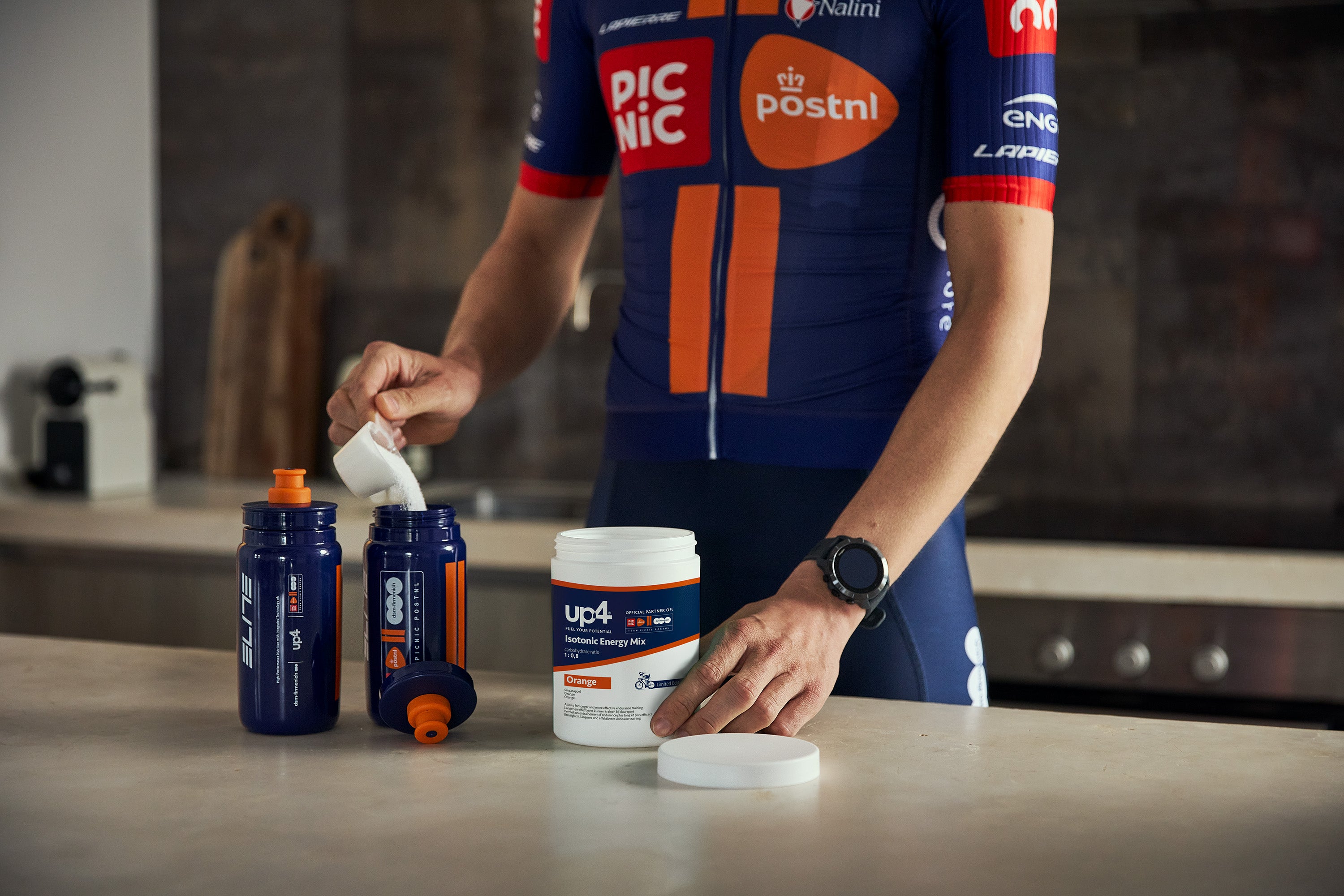
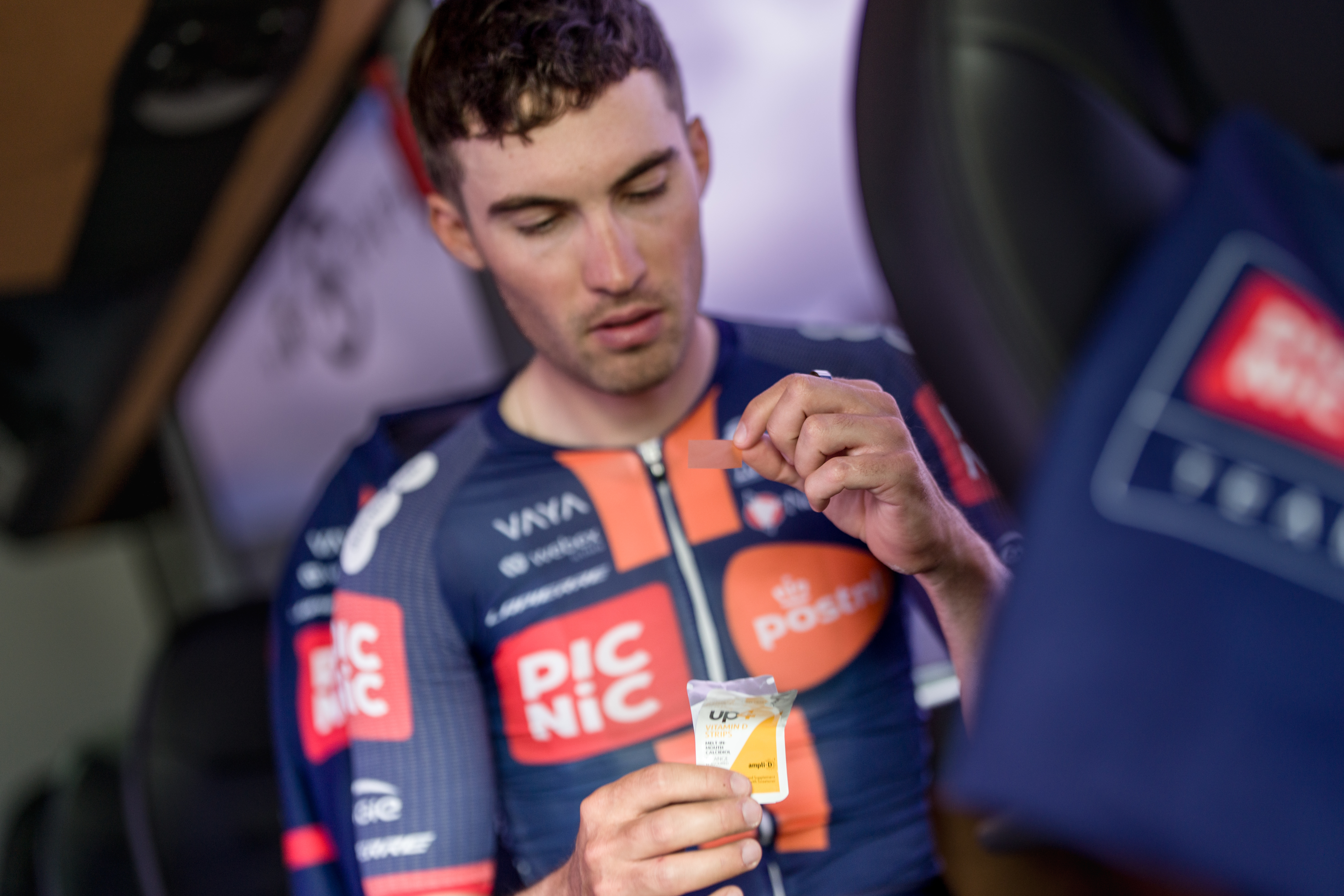
That’s where specialized nutrition like up4™ comes in. Iso-drinks, energy bars, energy gels, and recovery drinks can provide convenient sources of carbohydrates and other nutrients to help athletes meet the demands of intense training and competition.
How much fuel do you need?
There’s no one-size-fits-all answer.
The amount of fuel an athlete needs depends on the individual and the challenge. That’s why Job works with Team Picnic PostNL riders to create personalized nutrition plans. He considers factors such as race distance, duration, and elevation, alongside individual athlete data, to estimate energy expenditure and design an appropriate fueling strategy.
Sports nutrition is just one part of the puzzle. Job emphasizes that fresh, healthy meals are a non-negotiable foundation for any athlete. That means a daily diet containing plenty of fruit and vegetables, whole grains, a variety of protein sources, as well as dairy or fortified soy alternatives.
Sports-specific nutrition then helps the riders meet the additional demands of training and racing, particularly when sitting down for a full meal isn’t exactly convenient. For in-race fueling, Job recommends considering both the duration and intensity of your event when determining how much carbohydrate you need.
A typical sports gel or serving of sports drink may provide around 30 grams of carbohydrate, and many recreational endurance athletes can aim for approximately 30 to 90 grams of carbohydrate per hour during intense activity.

Start low, build up slowly
Professional athletes don’ t just train their muscles and their lungs to perform—they train their guts, too. For endurance athletes, being able to comfortably consume and absorb more carbohydrate during exercise can provide a significant performance advantage. Some professional cyclists target 120 grams per hour or more during competition.
But that doesn’t mean recreational athletes should jump straight to the top end of the scale. Instead, Job encourages LCW participants to train their gut well before race day. Start with a manageable amount during training sessions, for example around 30 grams of carbohydrate per hour. Gradually increase that amount as your body adapts.
A practical approach is to increase carb intake by around 15 grams per hour each week, provided you are tolerating the additional fuel comfortably. Most recreational athletes can expect that their limit will be no more than 90 grams of carbohydrate per hour.
The key is to find what works for you. Experiment during training rather than on race day, and choose the format (gel, drink, bar, or a combination) that you find easier to consume and that suits your sport.
What can LCW participants learn from the pros?
You don’t need to be a professional athlete to benefit from professional fueling principles. The first step is understanding what your body needs for the challenge ahead. If you’re like many endurance athletes, you may need more than you think.
As you prepare for the LCW, don’t leave nutrition until race day. Build a fueling strategy around the length and duration of your planned events, and make that strategy part of your training.
Whether you are swimming, cycling, running, or taking on all three at Long Course Weekend Belgium, we wish you the best of luck for a fun and successful day. See you at the finish line!
up4™ is a trademark of dsm-firmenich group.