
Omega-3 fatty acids are structural building blocks of the cells in your body. EPA and DHA contribute to the normal function of the heart, and DHA contributes to normal brain function and vision. So how do you know if you're getting enough? One measure researchers use is the Omega-3 Index.
What are omega-3 fatty acids?
Omega-3 is a collective name for a group of polyunsaturated fatty acids. The three main forms are:
- ALA: plant-based, found in flaxseed and walnuts.
- EPA: found in oily fish and algae. Together with DHA, it contributes to the normal function of the heart.
- DHA: found in oily fish and algae. A key structural component of the brain and eyes.
The body can convert ALA into EPA and DHA, but only in small amounts. That is why direct sources of EPA and DHA matter. Surveys suggest that around three in four people worldwide do not meet national guidelines for omega-3 intake. For a closer look at daily amounts, read How Much Omega-3 Do You Need Per Day?
What is the Omega-3 Index?
The Omega-3 Index measures the amount of EPA and DHA in the membranes of your red blood cells, shown as a percentage of the fatty acids there. Because red blood cells turn over within a period of months, it reflects your intake over the longer term rather than a single meal. The measure was introduced by researchers in the early 2000s (Harris and von Schacky, 2004).
The test is done on a small blood sample and can be arranged through a healthcare professional or specialist lab.
What is a good Omega-3 Index?
Researchers commonly group results like this:
- Below 4%: generally considered low.
- 4% to 8%: an intermediate range.
- 8% or above: the range researchers describe as optimal.
In observational research, higher Omega-3 Index levels have been associated with more favorable heart health outcomes. Research into other areas, such as cognitive function and mood, is ongoing. These studies show associations, not proof of cause and effect, and the index should not be used to diagnose or manage a medical condition. If you are concerned about your intake, speak to your doctor or dietitian.
Curious how athletes score? Read Omega-3 for Athletes: Can It Support Recovery?
How can you improve your omega-3 intake?
- Choose SMASH fish: salmon, mackerel, anchovies, sardines and herring. These oily fish are rich in EPA and DHA, and smaller species are generally lower in mercury than large predatory fish.
- Check your supplement: look at the amount of EPA and DHA per serving. Quality markers include freshness, shown by the TOTOX value (a lower value means less oxidation, and 26 is a commonly used upper limit), and independent testing.
- Use algae oil if you eat a plant-based diet: algae oil is the direct source of EPA and DHA that fish accumulate, so it suits vegans and vegetarians.
- Take it with food: omega-3 is fat-soluble, so take your supplement, or eat oily fish, with a meal that contains other fats to support absorption.
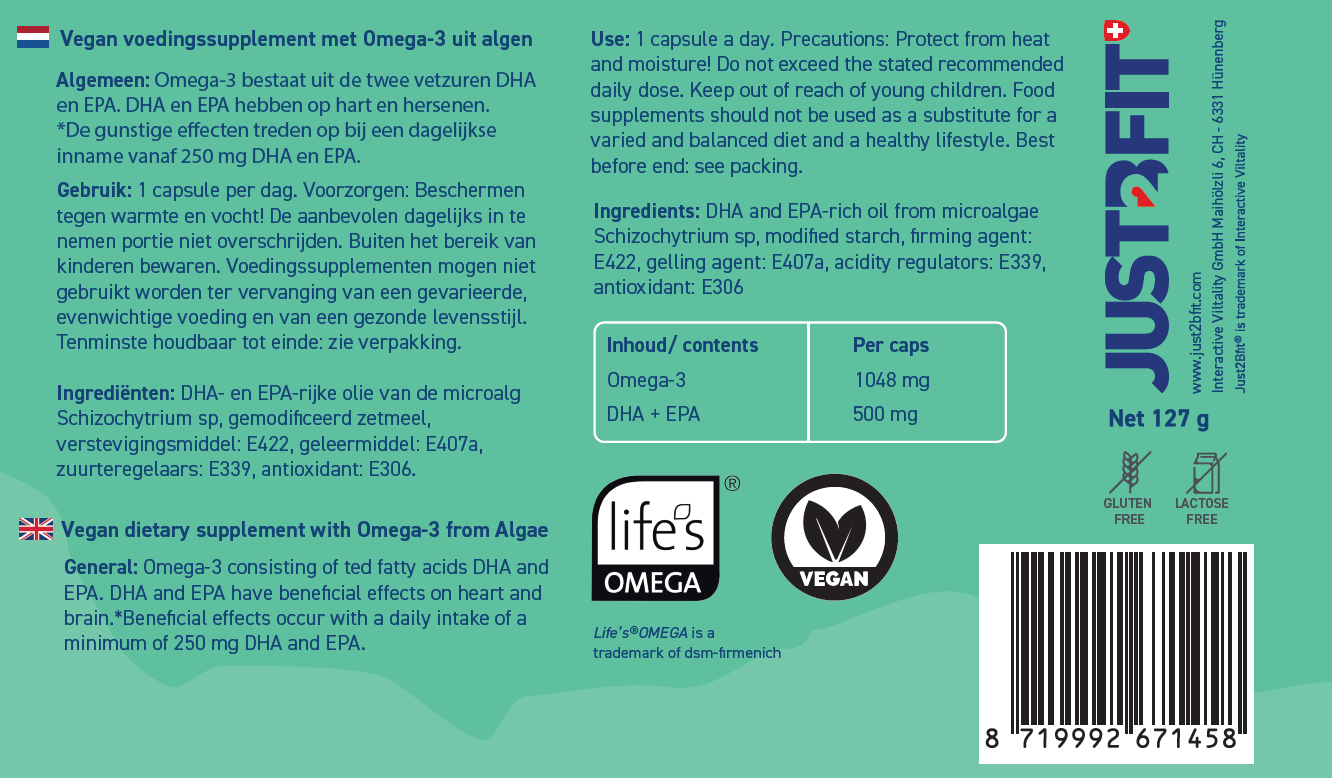
Looking for a plant-based option? Our Vegan Omega-3 Soft Capsules provide EPA and DHA from algae oil. Each capsule provides 1048 mg of omega-3, including 500 mg of EPA and DHA combined. Food supplements should not replace a varied, balanced diet.
The takeaway
EPA and DHA are essential parts of a balanced diet, and we can get them from food or supplements. The Omega-3 Index gives a picture of your longer-term status, and levels of 8% and above are considered optimal by researchers. If you are curious about your own level, a healthcare professional can arrange a test.
References
- Harris WS, Von Schacky C. The Omega-3 Index: a new risk factor for death from coronary heart disease? Prev Med. 2004 Jul;39(1):212-20. doi: 10.1016/j.ypmed.2004.02.030. PMID: 15208005.